

Spotlight: How NIST Helps Make Sure the Fish You Catch Are Safe to Eat
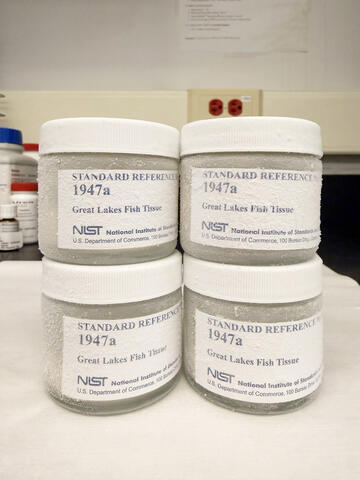
Credit: Carolyn Burdette/NIST
Summer is here, which means people are taking out their fishing gear and heading to the water. If you’ve gone fishing before, you may have seen a fish consumption advisory posted nearby.
Because fish can accumulate contaminants such as heavy metals from their environment, federal, state and local agencies measure contaminant levels in waterways to inform these advisories, which provide recommendations on eating fish from local waters.
To support contaminant measurements in fish, NIST developed SRM 1947a, Great Lakes Fish Tissue. This material is made from trout caught in Lake Ontario, one of the five Great Lakes. But despite the name, what’s inside is not a whole fish; rather, it’s ground fish tissue. NIST scientists at the Hollings Marine Laboratory in Charleston, South Carolina, froze the trout with liquid nitrogen, ground the tissue into a fine powder, and carefully analyzed it. When labs need to validate their fish contaminant testing methods, they can use SRM 1947a to ensure that they’re getting accurate results.
So, although SRM 1947a may never be served on a dinner plate, it gives laboratories confidence that their contaminant measurements are accurate and consistent and helps support the food safety industry.
—By Shannon Horning
Legal Disclaimer:
EIN Presswire provides this news content "as is" without warranty of any kind. We do not accept any responsibility or liability for the accuracy, content, images, videos, licenses, completeness, legality, or reliability of the information contained in this article. If you have any complaints or copyright issues related to this article, kindly contact the author above.
